Aluminum 6061 vs 7075: which alloy should you choose for CNC parts?
Quick answer
Choose 6061-T6 for most machined parts: housings, brackets, plates and fixtures. It is strong enough, machines well, resists corrosion, welds easily, anodizes cleanly and costs less. Choose 7075-T6 when strength is the main requirement: highly loaded, lightweight parts where 6061 would need to be thicker. 7075-T6 has roughly 1.8 times the yield strength of 6061-T6 (about 500 MPa vs 275 MPa), but it costs more, corrodes more easily and is not suited to welding. MakeNow machines both, with aluminum parts from $25 / part.
Get a price for your own file →What is the difference between 6061 and 7075 aluminum?
Both are heat-treatable aluminum alloys, and at MakeNow both are supplied in the T6 temper (solution heat-treated and artificially aged). The difference is the main alloying element.
6061 is alloyed with magnesium and silicon. It is the most widely used general-purpose aluminum for machined parts. It balances strength, corrosion resistance, machinability and weldability, and it is easy to source in plates, bars and tubes.
7075 is alloyed mainly with zinc, with magnesium and copper. This makes it one of the strongest common aluminum alloys, with strength close to some steels at about one third of the weight. It has long been used for highly stressed aircraft structures. The price for that strength is lower corrosion resistance, poor weldability and higher material cost.
In short: 6061 is the sensible default, and 7075 is the specialist alloy for parts where every gram and every MPa counts.
How do 6061-T6 and 7075-T6 compare in properties?
The values below are standard typical properties for the T6 temper. Exact values vary slightly by product form and thickness, so check the datasheet if your design is close to a limit.
| Property (typical, T6) | 6061-T6 | 7075-T6 |
|---|---|---|
| Ultimate tensile strength | ~310 MPa | ~570 MPa |
| Yield strength | ~275 MPa | ~500 MPa |
| Elongation at break | ~12% | ~11% |
| Brinell hardness | ~95 HB | ~150 HB |
| Fatigue strength | ~95 MPa | ~160 MPa |
| Density | 2.70 g/cm³ | 2.81 g/cm³ |
| Elastic modulus | ~69 GPa | ~72 GPa |
| Thermal conductivity | ~167 W/m·K | ~130 W/m·K |
| Corrosion resistance | Good | Fair |
| Weldability | Good | Poor |
Note one important point: the elastic modulus is almost the same. 7075 is much stronger, but it is not much stiffer. If your problem is that a part bends too much, switching to 7075 will barely help. You need more material or a better shape, such as ribs or a deeper section. 7075 helps when the part yields, cracks or fails in fatigue.
Which alloy is stronger, and does it matter for your part?
7075-T6 is clearly stronger: roughly 1.8 times the yield strength and higher fatigue strength than 6061-T6. It is also harder, so it resists dents and wear better.
In practice, most machined parts are not limited by strength. They are limited by stiffness, by the size needed for screws and features, or by appearance. For a typical electronics housing, sensor plate or fixture, 6061 already has a large safety margin, and paying for 7075 adds cost without real benefit.
7075 earns its place in parts that are highly loaded and need to be light at the same time: drone and robot arms, high-stress brackets, quick-release mechanisms, bike and sports components, molds and tooling plates, and aerospace-style structural parts. A common mistake is to specify 7075 "to be safe" on a part that would never come close to the limits of 6061.
How do they compare for machining, anodizing and welding?
Machining
Both machine very well in the T6 temper. 7075 is harder, so it gives slightly crisper edges and a very clean finish, while 6061 can be a little gummier on fine features. Neither is difficult for a CNC shop, and both hold MakeNow's standard tolerance of ±0.05 mm.
Anodizing
Both can be anodized in clear, black, red, blue and custom colors, type II or type III. 6061 typically gives a more even, cosmetic result. 7075 anodizes well too, but colors can look slightly different, so if you combine both alloys in one assembly, the colors may not match perfectly.
Welding
6061 is readily weldable, although the weld zone loses some strength. 7075 is generally considered unsuitable for fusion welding because it is prone to cracking. If your design needs welding, choose 6061.
Corrosion
6061 has good general corrosion resistance. 7075 is more sensitive, especially to stress corrosion cracking in some environments. Anodizing protects both, and is strongly recommended for 7075 parts used outdoors or in humid conditions.
How much more does 7075 cost than 6061?
At MakeNow, aluminum CNC parts start from $25 / part, and both 6061 and 7075 are available in the instant quote. 7075 stock is more expensive than 6061, so the same geometry will cost more in 7075. How much more depends on how much of the price is material and how much is machining time. On small parts with lots of features, the difference is smaller; on large, simple parts cut from big blocks, it is larger.
For reference, these 6061 example parts show typical prices: a milled base plate with a pocket starts from $38.90, and a black anodized sensor mounting plate starts from $46.50. The exact price for your part, in either alloy, is calculated from your file.
The fastest way to decide is to see both numbers. Upload your STEP file and switch between 6061 and 7075 to see the price difference for your part. Our CNC machining cost guide explains the other price drivers.
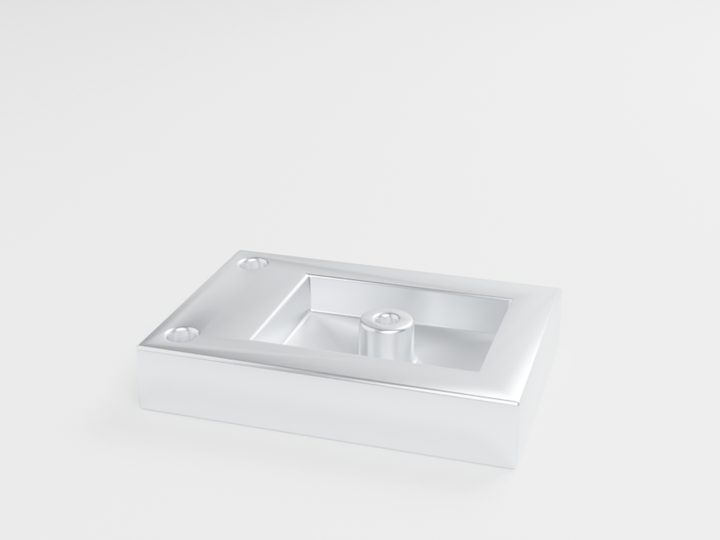
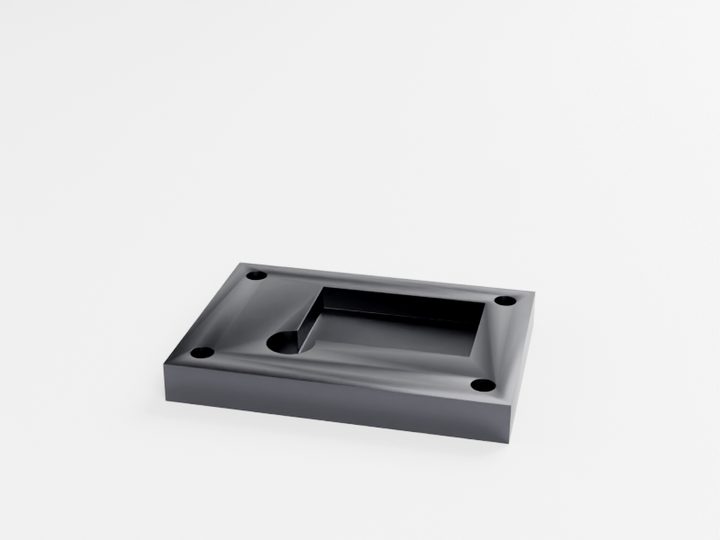
Typical starting prices for the pictured parts. Your exact price is calculated from your own file.
When should you choose 6061, and when 7075?
Choose 6061-T6 when
- The part is a housing, enclosure, plate, bracket, fixture or heat sink.
- Stiffness, not strength, decides the design.
- The part will be welded or used outdoors.
- You want the best cosmetic anodizing.
- Cost matters and loads are moderate.
Choose 7075-T6 when
- The part carries high static or repeated (fatigue) loads.
- Weight must be as low as possible at a given strength.
- You need a harder surface for wear or dent resistance.
- No welding is required, and you can anodize for corrosion protection.
MakeNow also offers 5083, a non-heat-treatable alloy with excellent corrosion resistance, often used for marine parts and welded plates. It is lower in strength than both 6061-T6 and 7075-T6.
What mistakes do people make when choosing between 6061 and 7075?
In practice, the same few mistakes come up again and again:
- Choosing 7075 to fix a stiffness problem. As shown above, the modulus is almost the same. A part that flexes too much in 6061 will flex almost as much in 7075.
- Ignoring corrosion on 7075. A raw 7075 part used outdoors or near salt water can corrode faster than expected. Anodize it, or use 6061 or 5083.
- Planning to weld 7075. Weld repairs or welded assemblies should be designed in 6061 from the start.
- Mixing alloys in a visible assembly. If several anodized parts sit next to each other, make them from the same alloy so the color matches.
- Forgetting threads. In both alloys, tapped threads in thin sections can strip under repeated assembly. For parts that are opened often, consider threaded inserts.
Checking these points before you order usually saves a redesign later.
What should you specify on your drawing?
Always name both the alloy and the temper, for example "6061-T6" or "7075-T6", not just "aluminum". If you need anodizing, state the type (II or III) and color, and mark any surfaces that must stay bare, such as electrical contact areas.
Keep tight tolerances for features that really mate, and leave the rest at standard. Our tolerances guide explains how. For more on materials, finishes and capabilities, see the aluminum CNC machining page.
If you are still unsure, start with 6061. It is the safer, cheaper choice for most parts, and you can move to 7075 later if testing shows the part needs more strength.
Questions people ask
Is 7075 aluminum stronger than 6061?
Yes. In the T6 temper, 7075 has a typical yield strength of about 500 MPa, compared with about 275 MPa for 6061. It is also harder and has better fatigue strength.
Is 7075 stiffer than 6061?
Only slightly. The elastic modulus is about 72 GPa for 7075 and 69 GPa for 6061, so switching alloy will not noticeably reduce bending. Change the geometry instead.
Can you weld 7075 aluminum?
7075 is generally considered unsuitable for fusion welding because it tends to crack. If your part must be welded, choose 6061.
Which aluminum is best for anodizing?
Both anodize well, but 6061 usually gives the most even cosmetic result. MakeNow offers clear, black, red, blue and custom anodizing on both alloys.
Ready to make your part?
Upload your file. Price in under a minute. No account needed.
Get my instant quoteSTL · STEP · OBJ · 3MF · DXF · SVG · up to 100 MB