How much does CNC machining cost?
Quick answer
CNC machined parts at MakeNow start from $18 / part for engineering plastics, $25 for aluminum, $28 for brass and copper, $32 for steel, $40 for stainless steel and $90 for titanium. Real examples: a turned brass knob starts from $21.40 and a milled 6061 aluminum base plate from $38.90. The price is driven mainly by machining time, which depends on geometry, tolerances and setups, plus material, quantity, finish and lead time. Upload a STEP file to get your exact price in under a minute.
Get a price for your own file →What drives the cost of a CNC machined part?
A CNC part is cut from a solid block or bar. Unlike 3D printing, where you pay mostly for the material that ends up in the part, in machining you pay mostly for machine time: how long the cutter needs to remove material and how many times the part has to be clamped.
The main cost drivers are:
- Material: both the price of the stock and how easy it is to cut. Aluminum and brass cut fast; stainless steel and titanium cut slowly and wear tools.
- Stock size: the bounding box of your part decides the size of the block. A large plate with a small pocket still needs a large block.
- Geometry: deep pockets, thin walls, small internal radii and many features add time.
- Setups: every time the part must be flipped or re-clamped, cost goes up. Features on six sides cost more than features on one side.
- Tolerances: tighter tolerances mean slower cuts and more inspection.
- Quantity: programming and setup are shared across the batch, so the price per part drops with quantity.
- Finish and lead time: anodizing, bead blasting or powder coating, and fast delivery, all add cost.
How much does CNC machining cost by material?
These are MakeNow's published starting prices. They apply to small, simple parts; your real price is calculated from your own file.
| Material | Grades | Best for | From |
|---|---|---|---|
| Engineering plastics | POM (Delrin), PEEK, Nylon 6, HDPE, PTFE, PC | Gears, bushings, insulators | $18 / part |
| Aluminum | 6061, 7075, 5083 | Housings, brackets, heat sinks | $25 / part |
| Brass and copper | C360, C110 | Fittings, electrical, decorative | $28 / part |
| Mild and tool steel | 1045, 4140, A36 | Structural, shafts, fixtures | $32 / part |
| Stainless steel | 303, 304, 316L, 17-4PH | Corrosion resistance, food and marine | $40 / part |
| Titanium | Grade 2, Grade 5 (Ti64) | Aerospace, medical, lightweight | $90 / part |
Aluminum is the default choice for most machined parts. It is light, strong, cuts quickly and can be anodized. Stainless steel and titanium cost more both because the stock is more expensive and because they take longer to machine. Inside one family, grades also differ: for example, 7075 aluminum costs more than 6061, as explained in our 6061 vs 7075 guide.
What do real CNC machined parts cost?
Here are example parts made in MakeNow workshops, with their typical starting prices for the pictured geometry:
- CNC turned brass knurled knob, 5 cm: from $21.40
- CNC turned 303 stainless stepped drive shaft, 12 cm: from $24.60
- CNC milled 6061 aluminum base plate with pocket, 10 cm: from $38.90
- CNC milled 6061 sensor mounting plate, black anodized, 13 cm: from $46.50
Two things stand out. First, turned parts like the knob and shaft are often cheaper than milled parts of similar size, because turning removes material quickly from round bar. Second, the anodized plate costs more than the raw base plate: it is larger and has an extra finishing step.
Size also matters through the machine envelope. MakeNow mills parts up to 800 × 500 × 400 mm and turns diameters from 2 to 200 mm. Parts near the top of that range need bigger stock and longer cycle times, so they sit at the high end of the price scale. Small parts that fit many to one block or one bar are the most economical.
Plastic parts follow the same logic. POM (Delrin) machines very cleanly and is one of the cheapest ways to get a precise gear or bushing. PEEK, on the other hand, is an expensive stock material, so a PEEK part will cost much more than the same shape in POM, even though both start in the engineering plastics group.
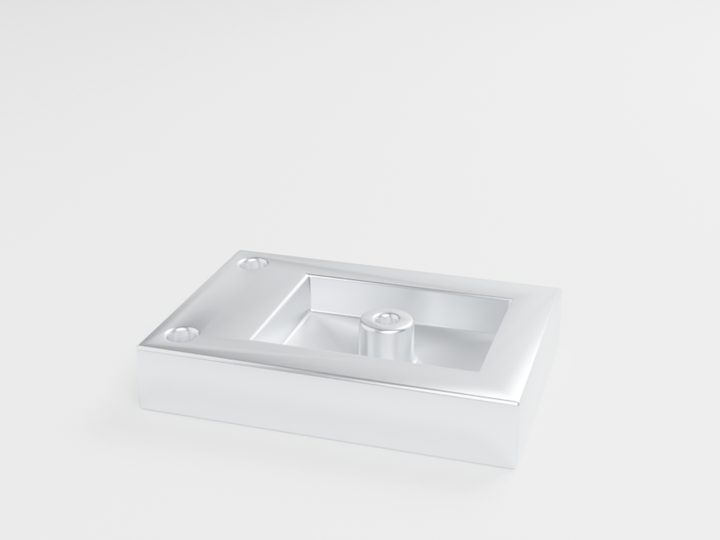
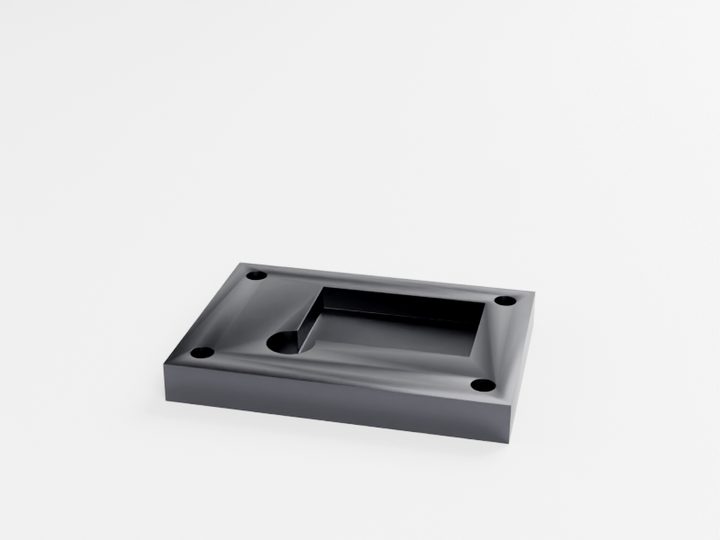
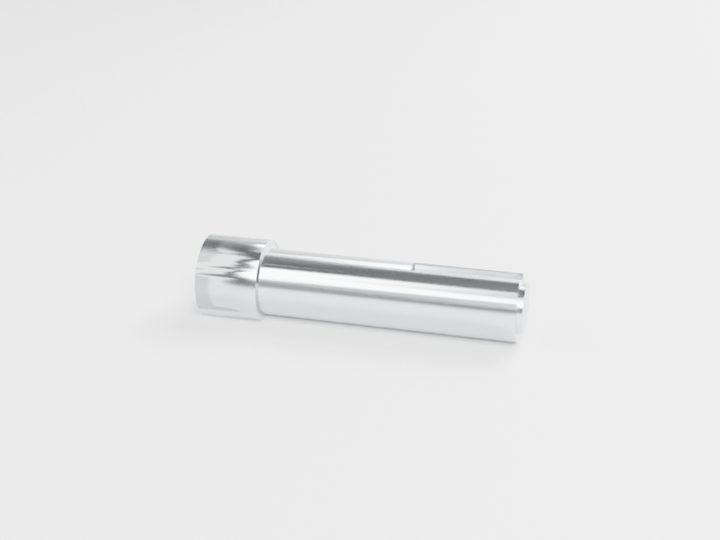
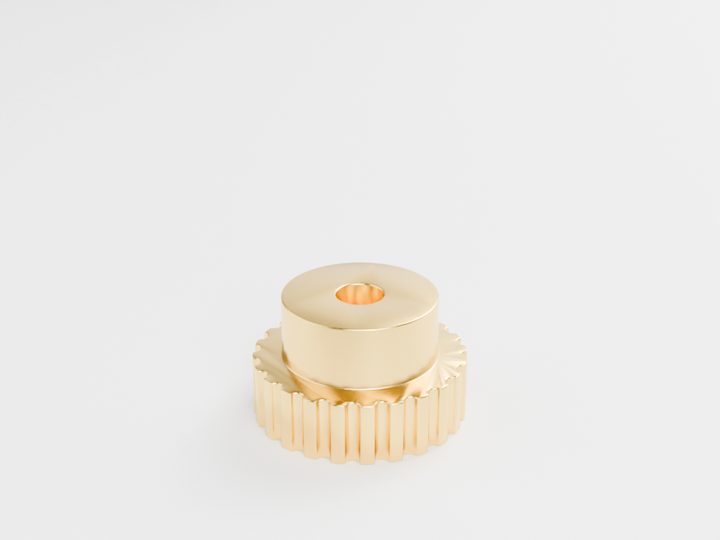
Typical starting prices for the pictured parts. Your exact price is calculated from your own file.
How do tolerances and finishes change the price?
MakeNow machines to ±0.05 mm as standard, with ±0.02 mm available on request. Standard tolerance is enough for most features. A common mistake is to put a tight tolerance on every dimension of the drawing. Each tight tolerance means slower finishing passes and more measuring, and the cost adds up quickly.
In practice, apply tight tolerances only where parts mate: bearing seats, dowel holes, sliding fits. Leave everything else at standard. Our tolerances guide explains how to specify them.
Finish works the same way. The standard as-machined finish (Ra 1.6) is already clean and is the cheapest option. Bead blasting gives an even matte look. Anodizing (type II for color and protection, type III for hard wear surfaces) and powder coating add a separate process step, so they add cost and some lead time. Choose a finish for a reason, such as corrosion protection or appearance, not by default.
How can you lower the cost of CNC machining?
Most of the savings are decided at the design stage. These changes reduce machining time without hurting function:
- Add internal corner radii. Cutters are round, so sharp internal corners are impossible or very slow. A radius slightly larger than the cutter radius lets the tool move without stopping.
- Avoid deep, narrow pockets. Pockets deeper than about 4 times the cutter diameter need long tools that must cut slowly.
- Keep walls thick enough. Thin walls vibrate during cutting and force slow passes. Around 1 mm minimum for metals and more for plastics is a sensible starting point.
- Reduce setups. Put features on as few sides as possible.
- Use standard hole sizes and threads. Standard drills and taps are faster than custom sizes.
- Choose the cheapest material that works. 6061 aluminum is often enough where people specify 7075 or stainless.
- Order in batches. The setup cost is spread over all the parts.
- Relax tolerances and skip unneeded finishes.
Is CNC machining more expensive than 3D printing?
For a single small plastic part, yes, usually. 3D printing starts from $5 per part at MakeNow, while CNC plastics start from $18. Printing has almost no setup, and complex shapes cost about the same as simple ones.
But CNC wins in several cases. If you need real metal properties, tight tolerances on mating features, threads, or a fine surface finish, machining is the right process. For metal parts, CNC is often cheaper than metal 3D printing, which starts from $45 per part. And as quantity grows, the setup cost of machining is spread out, so the gap gets smaller.
If you are unsure, compare both. Our 3D printing cost guide explains the other side of the comparison.
How do you get an exact CNC machining quote?
Traditional machine shops often need a drawing, a few days and some back and forth before you see a price. On MakeNow, the quoting engine analyzes your 3D model directly. Upload a STEP file (STL, OBJ and 3MF are also accepted), choose material, finish and quantity, and the price updates live. Production typically starts within 48 hours, and your delivery date is shown before you pay.
A STEP file gives the most accurate result for machining, because it keeps the exact geometry of holes and surfaces. See our STL vs STEP guide if you are not sure which format to export.
Upload your STEP file to get your CNC price in under a minute, or visit the CNC machining page for capabilities and materials.
Questions people ask
What is the minimum cost for a CNC machined part?
At MakeNow, CNC parts start from $18 per part in engineering plastics and from $25 in aluminum. There is no minimum order quantity, so you can order a single part.
Why is stainless steel more expensive to machine than aluminum?
Stainless steel stock costs more, and it must be cut more slowly, which also wears tools faster. That is why stainless starts from $40 per part and aluminum from $25.
Does a drawing make my CNC quote cheaper?
Not directly, but it avoids surprises. Tolerances, threads and finishes noted on a drawing make sure the part is made as intended; the price itself comes from the 3D model and the options you select.
How much does anodizing add?
It depends on part size and anodizing type. As one example, the 6061 sensor plate with black anodizing starts from $46.50; the exact cost for your part appears in the instant quote.
Ready to make your part?
Upload your file. Price in under a minute. No account needed.
Get my instant quoteSTL · STEP · OBJ · 3MF · DXF · SVG · up to 100 MB