PA12 vs PA11: which nylon should you choose for 3D printing?
Quick answer
Choose PA12 for most functional nylon parts: housings, brackets, connectors and production series. It is stiffer, very dimensionally stable, resists chemicals and is the most economical nylon (from $9 / part at MakeNow). Choose PA11 when the part must bend, flex or survive impact: living hinges, snap fits that open often, clips, sports and protective gear. PA11 stretches much further before breaking and is made from renewable castor oil. Both are printed on SLS and MJF without support structures.
Get a price for your own file →What is the difference between PA12 and PA11?
PA12 and PA11 are both polyamides, the family of plastics usually called nylon. The number refers to the number of carbon atoms in the repeating unit of the polymer chain. That small chemical difference changes how the material behaves.
PA12 is made from petroleum-based raw materials. It is the most common powder in SLS and MJF printing because it prints reliably, holds dimensions well and gives strong, stiff parts. If you have seen a grey or white nylon 3D printed part, it was most likely PA12.
PA11 is made from castor oil, a renewable plant source, which makes it a bio-based nylon. It is more ductile: it bends and stretches further before it breaks and absorbs impacts better. It is a little less stiff than PA12.
So the choice is mainly stiffness and stability (PA12) versus toughness and flexibility (PA11).
How do PA12 and PA11 compare side by side?
The table gives a qualitative comparison of the printed materials. Exact values depend on the process, the machine and the build direction, so check the datasheet in the quote tool for numbers.
| Criteria | PA12 | PA11 |
|---|---|---|
| Source | Petroleum-based | Bio-based (castor oil) |
| Stiffness | Higher | Slightly lower |
| Elongation at break | Moderate | Much higher |
| Impact resistance | Good | Very good |
| Dimensional stability | Very good | Good |
| Chemical resistance | Very good | Very good |
| Detail and accuracy | Very good | Good |
| Processes at MakeNow | SLS, MJF | SLS, MJF |
| Filled variants | PA12 GB (glass bead), glass-filled PA12 | None listed |
| Typical uses | End-use parts, connectors, housings | Living hinges, sports gear, clips |
| Starting price | From $9 / part | Shown in the instant quote |
In short, PA12 wins on precision and stiffness, PA11 wins on toughness. Both are strong, chemical-resistant engineering plastics suitable for end-use parts.
Which nylon is stronger: PA12 or PA11?
It depends on what "strong" means for your part.
If strong means stiff and resistant to bending under load, PA12 is the better choice. It holds its shape under steady load, which suits brackets, mounts and housings. For even more stiffness and heat resistance, the glass-filled versions (PA12 GB on MJF, glass-filled PA12 on SLS) go further.
If strong means hard to break, PA11 is the better choice. It stretches much further before failure, so a PA11 part tends to bend and recover where a PA12 part might crack. That makes PA11 more forgiving for parts that get dropped, hit or flexed many times.
A common mistake is to pick a material from the tensile strength number alone. For a clip, hinge or protective part, elongation and impact behavior matter more than the peak strength value.
When should you choose PA12?
PA12 is the default nylon, and for good reason. Choose it when:
- You need accurate, stable parts that fit into an assembly, such as connectors, housings and mounts.
- The part must be stiff and should not flex under load.
- You are ordering a production series and want the most consistent results batch to batch.
- The part has fine details, small text or thin features.
- You want a stiffer, glass-filled grade later without changing the design much.
- Cost is a priority: PA12 is the most economical printed nylon.
PA12 on MJF is particularly strong for series parts, because MJF produces dense parts with consistent properties. Read more on the PA12 nylon 3D printing page.
When should you choose PA11?
PA11 is the specialist for parts that must move, flex or take a hit. Choose it when:
- The part has a living hinge, a thin section that bends many times, like a box lid or a cable clip.
- It uses snap fits that are opened and closed often.
- It must survive impacts or drops, such as protective covers, sports equipment and wearable parts.
- It sees repeated flexing, where a stiffer material could crack over time.
- A bio-based material matters for your product or brand.
In practice, if a PA12 prototype cracks at a hinge or a clip during testing, trying the same design in PA11 is often the quickest fix, before changing the geometry.
One caution: PA11 is slightly less stiff and less dimensionally precise. If a part both flexes and needs a tight fit, test it before committing to a series.
Should you print PA12 and PA11 on SLS or MJF?
MakeNow offers both materials on both processes, so you can pick the process separately from the material.
- MJF gives denser parts, finer detail and a minimum tolerance of ±0.2 mm. Parts come out grey and are usually dyed black. It starts from $9 / part.
- SLS gives white parts that dye well in lighter colors, with a minimum tolerance of ±0.3 mm. It starts from $10 / part.
Both processes hold about ±0.3% on larger dimensions. For a full comparison of the two, read our SLS vs MJF guide.
How should you design parts in PA12 or PA11?
The design rules for both nylons are almost the same, so you can switch material without redrawing the part. A few points help you get the most from each:
- Wall thickness: keep load-bearing walls at about 1.5–2 mm or more. Thin walls can warp or break during powder removal.
- Living hinges: in PA11, a thin hinge section of roughly 0.5–0.8 mm with a generous length works well. Avoid sharp corners where the hinge meets the body, because stress concentrates there.
- Snap fits: give the cantilever a fillet at its root and a gentle lead-in angle. PA11 tolerates more deflection, so the same snap fit will usually feel softer in PA11 than in PA12.
- Hollow parts: add at least two escape holes so unfused powder can be removed.
- Moving clearances: for parts printed already assembled, leave a gap of roughly 0.5 mm or more.
- Threads: printed threads work for coarse sizes; for repeated assembly, use threaded inserts, which MakeNow can install.
Both nylons absorb a small amount of moisture from the air, which slightly changes their dimensions and makes them a little more flexible. For most parts this is not a problem, but allow for it on very tight fits. Dyeing and vapor smoothing are available for both materials if you need a sealed surface or a specific color.
How much do PA12 and PA11 parts cost?
PA12 parts start from $9 / part at MakeNow. PA11 is generally a more expensive powder, so the same part usually costs more in PA11; your exact price appears in the instant quote. As with any 3D printed part, the price depends on:
- Volume: how much material is fused.
- Bounding box: how much build space the part takes.
- Quantity: more parts share the build, lowering the price per part.
- Finish and lead time: dyeing, smoothing and express delivery add cost.
For reference, two PA12 example parts: an MJF side-release buckle starts from $6.80, and an SLS Y-duct manifold starts from $18.40.
The simplest way to decide is to compare prices for your own part. Upload your file and switch between PA12 and PA11 to see both prices in under a minute. For more ways to save, see our 3D printing cost guide.
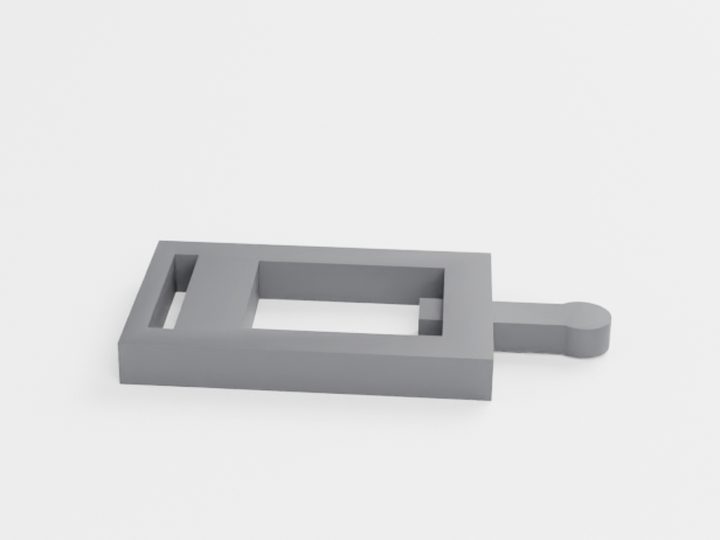
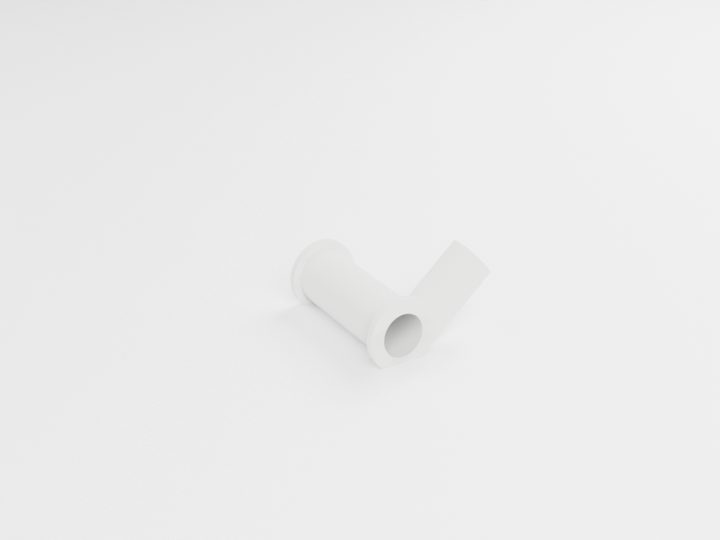
Typical starting prices for the pictured parts. Your exact price is calculated from your own file.
Questions people ask
Is PA11 better than PA12?
Neither is better overall. PA11 is tougher and more flexible, so it suits hinges, clips and impact parts. PA12 is stiffer, more dimensionally stable and more economical, so it suits most other functional parts.
Which nylon is best for living hinges?
PA11. It stretches much further before breaking, so thin hinge sections survive repeated bending better than in PA12.
Is PA11 environmentally friendly?
PA11 is bio-based, made from castor oil, a renewable plant source. That lowers its reliance on fossil raw materials, although it is not biodegradable.
Can I get PA12 and PA11 on both SLS and MJF?
Yes. MakeNow prints both PA12 and PA11 on SLS and on MJF. Glass-filled grades are available for PA12 only.
Ready to make your part?
Upload your file. Price in under a minute. No account needed.
Get my instant quoteSTL · STEP · OBJ · 3MF · DXF · SVG · up to 100 MB