SLS vs MJF: which nylon 3D printing process should you choose?
Quick answer
Choose MJF for production series, fine features, dense and consistent parts, and a slightly lower starting price (from $9 / part at MakeNow). Choose SLS when you want white parts that dye cleanly in bright colors, when you need glass-filled PA12, or when the part is a functional prototype where color matters more than the last bit of detail (from $10 / part). Both print PA12, PA11 and TPU without support structures, and both hold about ±0.3%. For most nylon parts, either works: upload your file and compare both prices side by side.
Get a price for your own file →What is the difference between SLS and MJF?
Both processes build parts in a bed of nylon powder, layer by layer. The unsupported powder holds the part while it prints, so neither process needs support structures. That is why both are so good for complex shapes, internal channels and parts nested inside each other.
The difference is how the powder is fused. SLS (Selective Laser Sintering) uses a laser that traces each layer and melts the powder point by point. MJF (HP Multi Jet Fusion) sprays a fusing agent and a detailing agent across the whole layer with an inkjet head, then passes an infrared lamp over the bed. Only the areas with fusing agent melt.
Because MJF treats the whole layer at once, the heat is more even. In practice this gives denser parts with more consistent properties in every direction. The detailing agent also sharpens edges, which helps small features. SLS, on the other hand, leaves the natural white color of the nylon, while MJF parts come out grey because of the dark fusing agent.
Which is stronger: SLS or MJF?
For the same material, the strength is close. PA12 printed on either process is tough, ductile and chemical resistant, and good enough for end-use parts like clips, housings, ducts and brackets.
MJF has two practical advantages. Parts are denser, so they are less porous and seal better against air and liquids. And they are more isotropic, which means the strength in the vertical build direction is closer to the strength in the flat directions. If your part carries load in several directions, or you will make hundreds of them and need every batch to behave the same, MJF is the safer choice.
SLS is still a strong process. A common mistake is to assume SLS is only for prototypes. With good design (sensible wall thickness, fillets at corners, no thin unsupported tabs), SLS PA12 parts work very well in service. If you need extra stiffness or heat resistance, SLS also offers glass-filled PA12, and MJF offers PA12 Glass Bead (GB), which improves stiffness and dimensional stability.
How do SLS and MJF compare side by side?
The table uses MakeNow's published specifications for both processes.
| Criteria | SLS | MJF |
|---|---|---|
| Fusing method | Laser, point by point | Fusing agent + infrared lamp, whole layer |
| Materials at MakeNow | PA12, PA11, glass-filled PA12, TPU | PA12, PA12 GB, PA11, TPU, PP |
| Layer height | 60–120 µm | 80 µm |
| Typical tolerance | ±0.3% (min ±0.3 mm) | ±0.3% (min ±0.2 mm) |
| Natural color | White | Grey (usually dyed black) |
| Support structures | None | None |
| Best for | Functional prototypes, hinges, ducts, colored parts | Production series, connectors, fine detail |
| Starting price | From $10 / part | From $9 / part |
Note the minimum tolerance: MJF holds ±0.2 mm on small dimensions where SLS holds ±0.3 mm. On a small clip or connector, that difference can decide whether a snap fit works on the first try.
Which gives better surface finish and color?
Both processes leave a slightly grainy, matte surface, because the outer layer of powder sticks to the part. MJF surfaces are usually a little smoother and more even, and edges look crisper. SLS surfaces feel a bit more powdery straight out of the machine.
Color is where SLS wins. SLS parts are white, so they take dye well in bright and light colors. MJF parts are grey all the way through, so the standard finish is black dye. If your part needs to be white, light grey or a brand color, start with SLS. If black is fine, MJF is the natural choice.
Both processes can be finished further. MakeNow offers dyeing in 10+ colors, vapor smoothing, primer and paint, and threaded inserts. Vapor smoothing seals the surface and makes it easier to clean, which helps for parts that are handled a lot.
When should you choose SLS, and when MJF?
Choose MJF when
- You order a production series and need every part to behave the same.
- The part has small features, thin text, fine lattices or tight snap fits.
- You need watertight or low-porosity parts, such as fluid or air channels.
- You want polypropylene (PP) for chemical resistance or welding; PP is only offered on MJF.
- Black or grey is an acceptable color.
Choose SLS when
- The part must be white or dyed a light or bright color.
- You want glass-filled PA12 for a stiff structural part.
- It is a functional prototype where the last 0.1 mm of detail does not matter.
- You print large, chunky parts where surface detail is less critical.
A practical path many engineers follow: prototype on whichever process is cheaper for the part, test the fit and function, then move to MJF for the series if consistency matters. Because the design rules are nearly identical, the same file usually works on both without changes. The only thing to recheck is any feature that relies on the tighter ±0.2 mm minimum of MJF.
Lead time is not a reason to choose one over the other. At MakeNow, production typically starts within 48 hours for both, and delivery takes 1–2 days in the US and 1–3 days in the UK and EU after that. Your exact delivery date is shown before you pay.
For material choice inside each process, see our guide on PA12 vs PA11. If you are still deciding between nylon and resin or filament, the 3D printing overview compares every technology we run.
How much do SLS and MJF parts cost?
At MakeNow, MJF starts from $9 / part and SLS from $10 / part. Your real price depends on your file. The quoting engine looks at:
- Part volume: how much nylon is actually fused.
- Bounding box: how much space the part takes in the build chamber. A long, thin part can cost more than a compact one with the same volume.
- Material: PA11, glass-filled grades and TPU price differently from standard PA12.
- Quantity: powder-bed processes pack many parts into one build, which is efficient for series.
- Finish and lead time: dyeing, smoothing and faster delivery add to the price.
Here are two real example parts. The MJF PA12 buckle starts from $6.80, and the SLS PA12 Y-duct starts from $18.40. The duct is larger and takes more chamber space, which is why it costs more.
To lower cost on either process, hollow out thick solid areas (leave escape holes so powder can be removed), avoid making parts larger than needed, and order quantities together. More ideas are in our 3D printing cost guide.
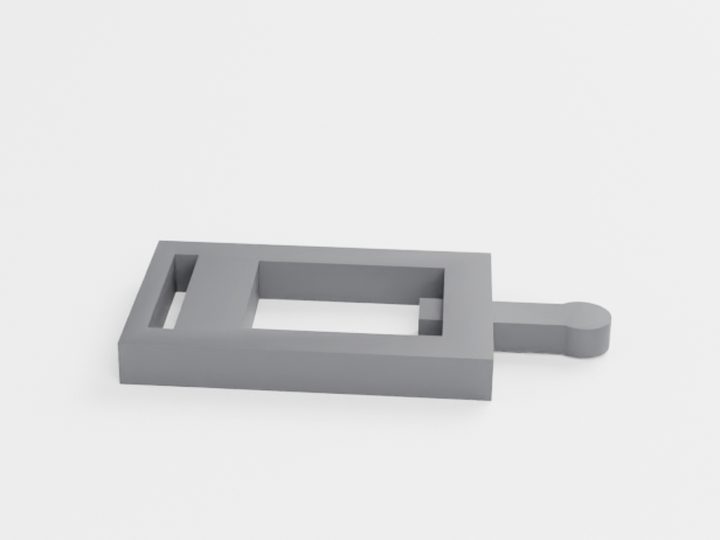
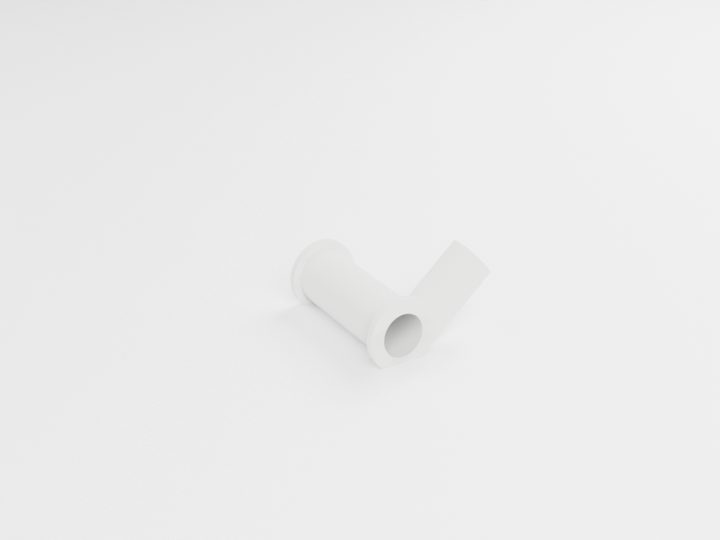
Typical starting prices for the pictured parts. Your exact price is calculated from your own file.
What design rules apply to both processes?
Design for SLS and MJF is almost the same, which makes it easy to switch between them later.
- Walls: keep load-bearing walls at about 1.5–2 mm or more. Very thin walls can warp or break during powder removal.
- Escape holes: hollow parts need at least two holes so unfused powder can be cleaned out.
- Clearances: for moving parts printed together, leave a gap of roughly 0.5 mm or more.
- Large flat areas: big, thin plates can warp as they cool. Add ribs or split the part.
- Tolerances: plan around ±0.3% and the minimum values in the table. For critical holes, ream or machine after printing.
In practice, the best way to decide is to price both. Upload your file to compare SLS and MJF prices in under a minute, then pick based on color, detail and budget.
Questions people ask
Is MJF better than SLS?
Not always. MJF gives denser, more consistent parts and finer detail, which suits production series. SLS is better when you need white or brightly dyed parts, or glass-filled PA12.
Can MJF parts be white?
No. The fusing agent makes MJF parts grey all the way through, so the standard finish is black dye. If your part must be white or a light color, choose SLS.
Are SLS and MJF parts watertight?
MJF parts are denser and less porous, so they seal better. For parts that must hold liquid or pressure, a sealing step such as vapor smoothing helps on either process.
Which is cheaper, SLS or MJF?
At MakeNow, MJF starts from $9 / part and SLS from $10 / part. The real price depends on your part's volume, size, material and quantity, so upload your file to see both.
Ready to make your part?
Upload your file. Price in under a minute. No account needed.
Get my instant quoteSTL · STEP · OBJ · 3MF · DXF · SVG · up to 100 MB